
Table of Contents
ToggleWhen it comes to energy drinks, Monster is a heavyweight champion, ready to pack a punch and wake you up faster than your morning alarm. But just how much caffeine is hiding in that colorful can? If you’ve ever found yourself wide-eyed and jittery after a sip, you’re not alone. Knowing the caffeine content can help you navigate your energy needs without turning into a caffeine-fueled superhero—unless that’s your goal.
With a variety of flavors and formulations, Monster offers a caffeine range that could leave even the most seasoned coffee drinker scratching their head. Let’s dive into the nitty-gritty and uncover the caffeine content lurking in those eye-catching cans, so you can make informed choices and keep your energy levels soaring without the side effects of a caffeine crash.
Overview of Monster Energy Drinks
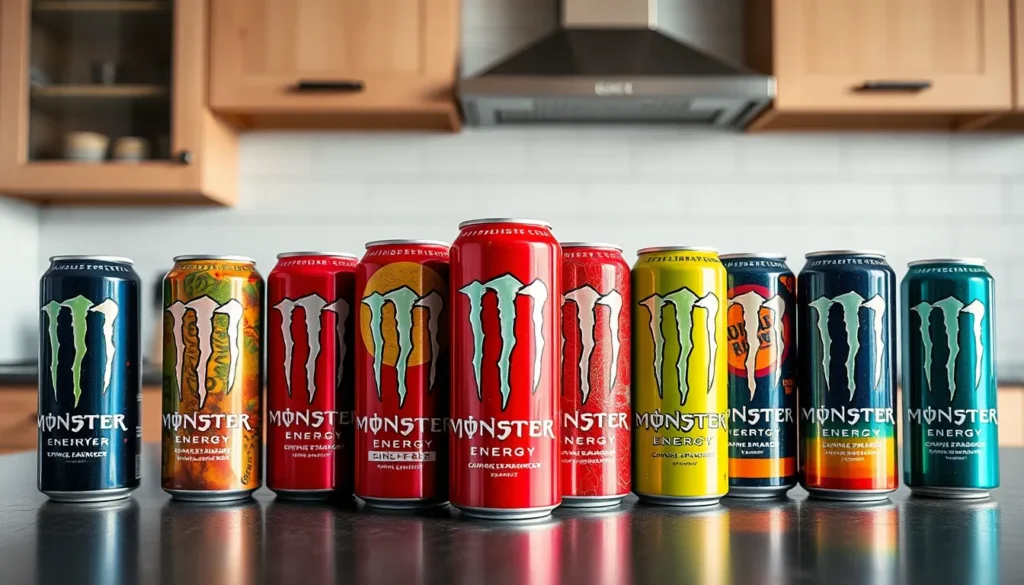
Monster energy drinks come in various formulations and flavors. Each variety provides a different caffeine content, impacting energy levels for consumers. Regular Monster contains 160 mg of caffeine per 16 oz can, which enhances alertness and stamina. Some flavors, like Monster Ultra, also hold 140 mg of caffeine but with fewer calories.
Specialty versions offer varied caffeine amounts. For instance, Monster Rehab includes 80 mg of caffeine while providing electrolytes for hydration. Other options like Monster Java combine coffee and energy drink benefits with 200 mg of caffeine per 15 oz can.
Consumption patterns vary among users. Many people enjoy drinks like Monster for an energy boost during workouts or late-night study sessions. Understanding the different caffeine levels across the product line can help users select the appropriate drink for their specific energy needs.
All varieties contain additional ingredients, such as taurine and B vitamins. These components may enhance the overall effect of caffeine, making consumers feel more energized.
Reviewing the specific caffeine content in each Monster drink ensures informed choices. Analyzing personal tolerance to caffeine can also guide users in selecting the best option for their lifestyle.
Caffeine Content in Different Variants
Understanding the caffeine content across various Monster energy drink variants helps consumers choose the right option for their energy needs. Here’s a breakdown of the caffeine levels in popular flavors.
Original Monster
Original Monster delivers 160 mg of caffeine in a 16 oz can. This amount provides a significant energy boost for those needing extra stamina, especially during workouts or long study sessions. Additionally, it contains other ingredients that may enhance performance, like taurine and B vitamins. These components work together with caffeine to promote alertness and focus, making it a reliable choice for energy seekers.
Monster Zero Sugar
Monster Zero Sugar contains 140 mg of caffeine per 16 oz can, offering a lower-calorie alternative without sacrificing energy levels. Many enjoy this flavor for its crisp taste and fewer calories while providing a similar boost to the original. The absence of sugar can appeal to consumers looking for a guilt-free option. Besides caffeine, it also includes various vitamins for added benefits and sustained energy.
Monster Ultra
Monster Ultra packs 140 mg of caffeine in each 16 oz can, striking a balance between flavor and energy. This sugar-free option allows individuals to enjoy the benefits of caffeine while avoiding excess calories. Known for a lighter taste and variety of flavors, Monster Ultra caters to those who want to maintain their energy levels without the sugar rush. It also includes components like electrolytes, supporting hydration during physical activities.
Comparison with Other Energy Drinks
Comparing caffeine levels among popular energy drinks highlights important differences. Brands like Red Bull and 5-hour Energy typically contain lower caffeine levels than Monster energy drinks. Red Bull offers 80 mg of caffeine in an 8.4 oz can, significantly less than Monster’s 160 mg per 16 oz can. 5-hour Energy features 200 mg of caffeine in a smaller 2 oz bottle, positioning it among the stronger options.
Other brands like Rockstar and Bang present unique caffeine content as well. Rockstar energy drinks typically range from 160 mg in its standard varieties to 300 mg in some versions. Bang stands out with its 300 mg per 16 oz can, appealing to consumers seeking maximum energy boost.
Caffeine Levels in Popular Brands
Caffeine levels across leading energy drink brands can influence consumer choices. Red Bull contains 80 mg, while Monster offers 160 mg in its Original flavor. Rockstar’s standard options now house about 160 mg, but some formulations escalate up to 300 mg. Bang features an impressive 300 mg of caffeine, attracting those wanting intense stimulation. 5-hour Energy, compact yet powerful, provides 200 mg despite its small size. Evaluating these levels helps consumers find drinks that match their energy needs without excessive intake.
Health Implications of High Caffeine Consumption
High caffeine consumption can lead to various health concerns. Overconsumption may result in anxiety or restlessness, especially in sensitive individuals. Heart rate increases significantly with excessive intake, leading to potential complications. Insomnia becomes an issue as caffeine disrupts sleep patterns, countering the intended energizing effects. While moderate consumption may offer benefits, maintaining awareness of personal limits is essential. Health professionals recommend keeping daily caffeine intake below 400 mg to minimize adverse effects. Therefore, understanding caffeine levels in energy drinks, such as Monster, is crucial for responsible consumption.
Consumer Experience and Preferences
Consumers often evaluate their caffeine preferences when selecting Monster energy drinks. Regular Monster, with 160 mg of caffeine per 16 oz can, serves as a popular choice for those seeking robust energy boosts during workouts or study sessions. Many enjoy the lighter taste and lower calorie options like Monster Zero Sugar and Monster Ultra, both providing 140 mg of caffeine while maintaining flavor without excess sugar.
Preference varies when it comes to caffeine content. Some individuals gravitate towards specialty versions, such as Monster Rehab, which contains 80 mg and offers added electrolytes for hydration. Others opt for Monster Java, merging coffee and energy drink benefits with 200 mg per 15 oz can, appealing to coffee aficionados.
Exploring the caffeine landscape reveals consumer awareness. Comparisons with other brands show that Red Bull includes only 80 mg in an 8.4 oz can, positioning Monster as a strong contender in the market. Consumers choosing Rockstar and Bang face varied caffeine levels, ranging from 160 mg to as much as 300 mg, emphasizing the need for personal tolerance awareness.
Experiencing the effects of caffeine leads to informed choices. Many users recognize the need to moderate their intake to avoid potential side effects like anxiety and insomnia. Research suggests that keeping daily caffeine consumption below 400 mg minimizes adverse impacts. Choosing the right Monster variant aligns with personal energy needs and lifestyle, ensuring enjoyable experiences without excess.
Understanding the caffeine content in Monster energy drinks is crucial for making informed choices. Each variant offers different levels of caffeine tailored to various preferences and needs. Whether it’s the robust Original Monster or the lighter Monster Ultra, consumers can find an option that suits their lifestyle.
It’s essential to monitor caffeine intake to avoid potential side effects. By recognizing personal tolerance and selecting the right drink, individuals can effectively manage their energy levels while enjoying the unique flavors Monster has to offer. Staying informed empowers consumers to enjoy their energy boost responsibly.


